
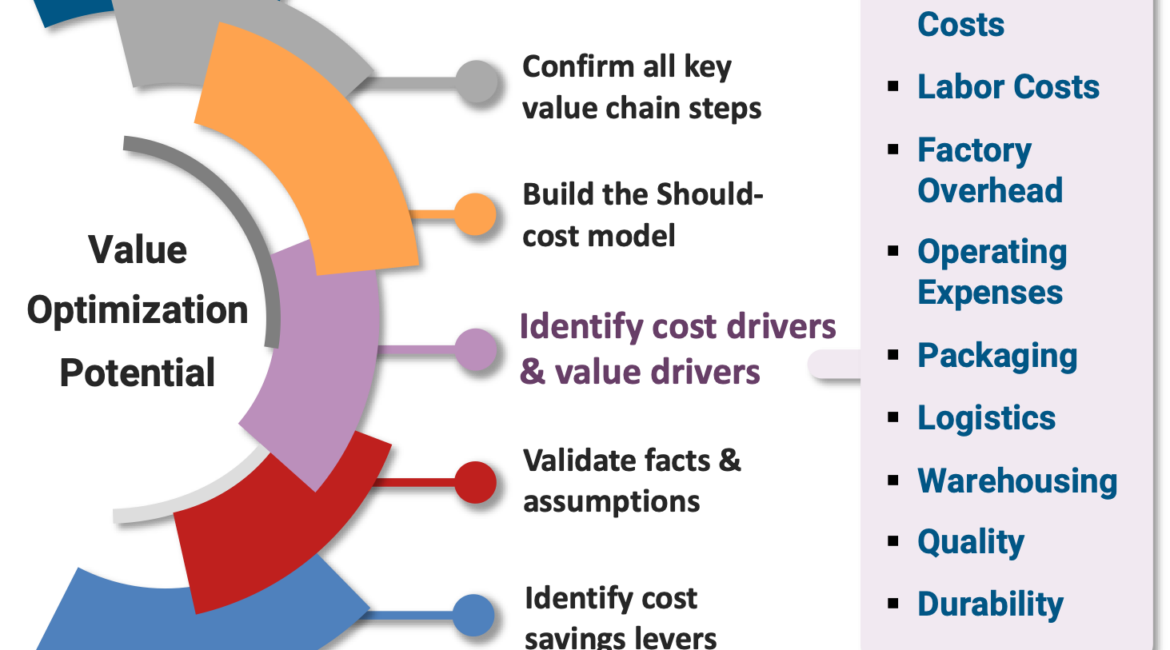
Should-cost models develop the visibility needed to deliver sustainable value. These powerful tools provide a pathway to rapid, reliable cost reduction. A big claim, yes, but let’s examine the steps to develop this value:
- Understand the value chain. This knowledge provides the perspective needed to make reliable decisions.
- Build the should-cost model. The most challenging part of this step is for the modeler to keep pressures from various special interests out of the equation. The modeler must have the courage and organizational prestige to tell people no.
- Use the cost model’s visibility to identify cost drivers and value drivers. The intelligence revealed by the cost model will require value chain understanding and product expertise to interpret correctly.
- Develop cost reduction levers (action plans) needed to realize savings from the intelligence in the cost drivers. A collaborative approach will help you identify the most significant value and develop a rapid implementation action plan.

Now we have a should-cost model with cost reduction levers. Of course, we are wise, so our cost reduction actions optimize value; they do not recklessly cut costs.

Facts & Assumptions
The visible facts and assumptions we have documented facilitate our engagement with internal partners and key suppliers. This detail is vital as there will be disagreements about the Should-cost results. All models use assumptions based upon circumstances. These assumptions are open to debate. You may want to examine the range of costs based upon using different mixes of assumptions. Facts are easier to establish; assumptions often generate lively discussions. These discussions are one of the benefits of a Should-cost model. By working through conflicts, we:
- Clarify the model.
- Bring visibility to more facts.
- Refine the assumptions used to build the model.
- Leverage knowledge in the supply chain.
Control the Focus
Keep the discussion focused on the model’s underlying data. Do not get hijacked by people with unsupportable tangents. If someone disagrees, always ask, “On what facts and assumptions are your ideas based?”
Keep an open mind and collect knowledge to increase the Should-cost model’s reliability and effectiveness.
Using the Model
There is no such thing as a “bulletproof” model. An experienced modeler will know where its weaknesses lie and will seek information from suppliers. This effort is a two-way street. In my experience, suppliers who collaborate with a modeler are the most likely to gain orders and establish long-term relationships. Both sides must guard their sensitive information to keep the relationship ethical. This type of professional relationship will help you build solid models that are a vehicle for:
- Building effective communication
- Engaging suppliers and their intelligence.
- Using data to build actionable knowledge.
- Identifying cost reduction and value optimization actions.

A Word of Warning
The visibility provided by a should-cost model will inevitably uncover things that may embarrass some people, at times, influential people. You will need to develop your reputation for integrity and be wise in overcoming the opposition they may throw at the process. You are building sustainable value. Keeping that fact and the measurable results visible will be the best defense against naysayers and short-sighted people.
